ETO Ecosystem Upgrade Masterpiece: MANA GAME Ushers in a New Era of Decentralized Blockchain Gaming


分享到朋友或朋友圈
As the global gaming industry steps into the Web3.0 era, a revolution about "asset ownership confirmation and free value circulation" is quietly happening. As a pioneer explorer in the blockchain gaming field, ETO (Decentralized DEX Gaming Protocol) has been committed to "restructuring the gaming ecosystem" since its birth, quickly establishing itself with its decentralized architecture and innovative economic model. Today, ETO, in collaboration with two industry giants, Armonia Group and KoeiTecmo, officially unveils the multi-chain aggregated chain game engine platform—MANA GAME, marking the decentralized chain game ecosystem's transition from "single-point breakthrough" to "full-domain resonance," opening a new value dimension for 3.42 billion global players and thousands of game developers.
1. ETO: The Pathfinder and Founder of Decentralized Chain Games
In the traditional gaming industry, pain points such as "players pay but do not own assets," "developers are constrained by centralized platforms," and "value circulation is blocked by layers of barriers" have long existed. According to Newzoo data, the global gaming market size exceeded $214 billion in 2024, but blockchain games accounted for less than 0.1%. Behind this huge contrast is the industry's urgent need for "decentralized solutions." The emergence of ETO is precisely to fill this gap.
1.1 Technical Foundation: The "Asset Revolution" Empowered by Blockchain
ETO was jointly initiated by BSC Wallet and the mainstream decentralized exchange THE, built on the Binance Smart Chain (BSC). Its core lies in eliminating the centralized control of traditional games through a decentralized architecture. In the ETO ecosystem, all game assets (items, equipment, characters, etc.) are on-chain in the form of NFTs. Players truly control asset ownership through blockchain private keys, enabling free trading and cross-platform circulation on-chain, completely avoiding the risk of "assets becoming zero when the platform shuts down."
Behind this technological breakthrough is ETO's practice of the "Play&Own" concept. Just as THE project (the second-largest DEX on the BSC chain) advocates "freedom of liquidity," ETO extends "asset freedom" to the gaming field, automating transactions and profit distribution through smart contracts to ensure transparency and traceability, eliminating under-the-table operations.
1.2 Market Validation: The Ecological Breakthrough of "Stellar Voyage"
In 2025, ETO launched its first flagship game, "Stellar Voyage," validating the commercial potential of decentralized games with its "Play-to-Earn" mechanism. The game is set against the backdrop of "Mars immigration after Earth's ecological collapse." Players participate in voyages with tickets + ETO fuel. Successful arrivals receive double the market price in ETO rewards, while failures refund the tickets and receive courage rewards.
This design retains the game's entertainment value while lowering the participation threshold with a "value in both winning and losing" mechanism. Data shows that "Stellar Voyage" attracted over 100,000 players in its first month, with daily active peaks exceeding 30,000. The circulation of ETO tokens increased by 47% compared to the initial stage, validating the feasibility of "gaming + blockchain."
2. MANA GAME: The Leap from "Single Game" to "Ecological Engine"
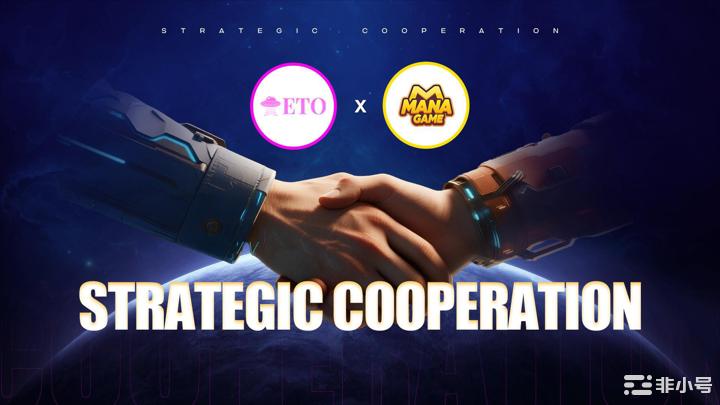
If ETO is the "experimental field" of decentralized chain games, then MANA GAME is the "super ecological platform" built on this foundation. This chain game universe, created by ETO in collaboration with Armonia Group (a blockchain infrastructure service provider) and KoeiTecmo (a top Japanese game developer, known for "Romance of the Three Kingdoms" and "Dead or Alive"), redefines the boundaries of chain game platforms with its core of "modular development, multi-chain deployment, and value closed-loop."
2.1 Technical Architecture: The "Infrastructure Revolution" of Multi-Chain Integration
The technological breakthrough of MANA GAME lies in its modular engine of "develop once, deploy on all chains." Traditional chain game developers need to adapt code for each public chain separately, which is costly and inefficient. MANA GAME provides standardized SDKs and smart contract templates, supporting seamless access to mainstream public chains such as Ethereum, BSC, Polygon, and Solana. Developers only need to complete development once to allow games to circulate on all chains.
This architecture not only lowers the technical threshold but also breaks the "public chain island" effect. For example, game assets based on Ethereum can be cross-chained to BSC through MANA GAME, combining with ETO ecosystem items, greatly enhancing asset liquidity and application scenarios.
2.2 Dual Token System: The Art of Balancing Value Stability and Growth
MANA GAME innovatively introduces a dual token system, constructing a closed-loop of "stable circulation + value growth":
•MG (Gem): Unlimited total supply, non-tradable, only as in-game exchange vouchers. Players can recharge to obtain equivalent MG for participating in various games. Winners can exchange it for MGT (with a 5% fee), while losers automatically destroy it, ensuring its stability as an "in-game currency," similar to "Q coins" in traditional games;
•MGT (Platform Token): Total supply of 21 million, with no pre-mining or private placement, all produced through game consumption. As a platform governance and value-anchored token, MGT's upward logic comes from multi-dimensional buying and destruction: 100% of player recharge funds buy MGT injected into the bottom pool, 20% of the 5% fee from winners is used to buy and destroy tokens, and part of the 5% fee from losers' computing power dividends is also destroyed.
This "platform + developer + player" symbiotic model is expected to attract over 10 million users by 2026, forming an ecological scale with annual turnover in the tens of billions.
3. Restructuring Industry Logic: The Three Disruptive Values of MANA GAME
The launch of MANA GAME is not only an upgrade of the ETO ecosystem but will also bring systematic changes to the gaming industry, blockchain applications, and user value distribution.
3.1 For Game Developers: Lowering Thresholds, Unleashing Creativity
Traditional game development faces three major pain points: "high technical barriers, high distribution costs, and low profit sharing." Taking a top centralized platform as an example, developers need to bear over 30% of channel sharing, and user data and asset ownership are monopolized by the platform.
MANA GAME solves these problems through three major measures:
•Technical Inclusivity: Providing ready-made smart contract templates and multi-chain adaptation tools, small and medium teams can develop chain games without blockchain professionals;
•Traffic Feedback: The platform aggregates ETO's original 100,000 users and Armonia Group's million-level blockchain users, allowing developers to gain free traffic exposure;
•Profit Autonomy: Developers can customize in-game purchases, item transaction fees, and other profit models, with the platform only charging 10% of game turnover, far lower than traditional channels.
As the CEO of Armonia Group said: "MANA GAME aims to be the 'Steam' of the chain game field, but more open than Steam—developers can not only make money but also truly own their users and assets."
3.2 For Players: From "Consumers" to "Ecological Co-builders"
In MANA GAME, players' identities undergo a fundamental transformation:
•Diverse Profits: In addition to in-game winning rewards, obtaining computing power allows participation in platform governance dividends (30% of daily revenue is distributed to computing power holders). Recommending new users can earn 10%-100% dynamic rewards from team turnover; even game novices can receive MGT dividends through computing power after losing, forming a "value in losing" safety net, significantly lowering the participation threshold for blockchain games.
This "playing games = accumulating assets = participating in governance" model is expected to increase the penetration rate of chain game users from the current 0.1% to over 5% by 2027.
3.3 For the Blockchain Industry: From "Speculation" to "Practical Application"
For a long time, the blockchain industry has faced skepticism about "lack of application scenarios," with most tokens becoming speculative tools. MANA GAME finds a practical outlet for blockchain technology through the high-frequency scenario of gaming:
•Token Value Anchoring: MGT's price is supported by real game turnover, not just speculation.
•Cross-Chain Value Circulation: Through multi-chain deployment, tokens such as Ethereum's ETH, BSC's BNB, and Solana's SOL can be used as payment tools in games, enhancing the practical value of encrypted assets;
"Blockchain should not stop at speculation. The 'real application construction' represented by MANA GAME is the future of the industry."
4. Future Outlook: The Dawn of a New Era for Chain Games
The launch of MANA GAME marks the transition of decentralized games from "concept validation" to "large-scale implementation." According to the ecological plan, the platform will continue to focus on three dimensions:
Technological Iteration: In Q4 2025, launch "AI + Chain Game" features, using artificial intelligence to generate personalized game scenes. Players can adjust rules in real-time, achieving "a thousand faces for a thousand people" gaming experiences; in 2026, integrate quantum computing protection technology to enhance the security of on-chain assets.
Ecological Expansion: Beyond the gaming field, MANA GAME plans to extend its ecosystem to virtual social and digital collection fields, such as building "on-chain metaverse cities," where players can use MGT obtained in games to purchase virtual real estate, achieving full-scenario coverage of "gaming-social-life."
Global Layout: Leveraging KoeiTecmo's distribution network in Asia and Armonia Group's resources in Europe and America, MANA GAME will establish localized operation centers in Japan, the United States, Southeast Asia, and other regions, aiming to surpass 100 million global users by 2027, becoming the first "billion-level" chain game ecological platform.
From ETO's single-point exploration to MANA GAME's ecological explosion, decentralized chain games are rewriting industry rules. In this transformation, players are no longer passive consumers but owners of assets and co-builders of the ecosystem; developers are no longer constrained by centralized platforms but masters of creativity; blockchain technology is no longer an obscure concept but a practical tool integrated into entertainment life.
As MANA GAME's slogan says: "The rules of the game are now written by you." When the potential of 3.42 billion global players is activated, when the technological dividends of blockchain and the entertainment attributes of games are deeply integrated, a new "chain game civilization" is quietly beginning—and MANA GAME is the pioneer of this civilization.