HashWhale Crypto Weekly Report | (10.25-10.31)


分享到朋友或朋友圈
Author: Meng Qi | Editor: Meng Qi
1. Bitcoin Market
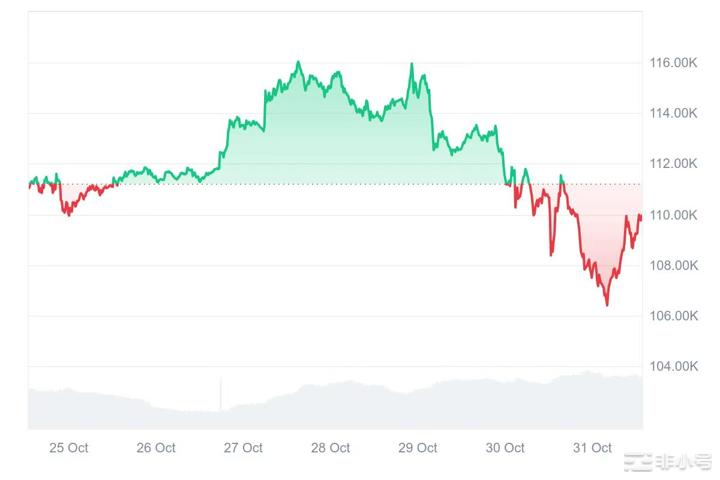
Bitcoin Price Trend (2025/10/25-2025/10/31)
Sideways Consolidation Phase (October 25 to October 26)
On October 25, the Bitcoin price gradually rose slightly from $110,000 to around $112,000. On October 26, the Bitcoin price consolidated around the $111,600 level, building momentum.
Trend Causes:
1. Improved Macroeconomic Expectations
The market widely expects the Federal Reserve to cut interest rates in the near term, reducing the opportunity cost of holding risk assets. At the same time, the easing of U.S.-China trade tensions and reduced tariff risks provide positive sentiment support for risk assets (including Bitcoin).
2. Structural Technical Breakthrough
Bitcoin broke through the 50-day moving average (SMA50), which was seen by the market as a signal of "short-term trend shifting from sideways to upward." After breaking through the key resistance zone (approximately $112,000–$114,000), it triggered leveraged short positions to close, and such "short liquidations" typically accelerate breakout trends.
Oscillating Rise Phase (October 26 to October 27)
On the evening of October 26, Bitcoin broke through the $112,000 resistance level, rising close to the $114,000 level; on October 27, it continued to break through the $114,000 resistance level, maintaining strong upward momentum and rising to around $116,000.
Trend Causes:
1. Short Liquidations Ignite the Trend
CoinGlass data shows that on the evening of October 26, approximately $319 million in short positions were forcibly closed, the highest level in nearly three weeks.
After breaking through key resistance levels, stop-loss and forced liquidation were triggered, forming a "Short Squeeze," which passively pushed up the price.
After breaking through $114,000 on October 27, a second round of short liquidations triggered a chain reaction again, accelerating the price increase.
2. Macroeconomic and Geopolitical Benefits
Enhanced Federal Reserve rate cut expectations: The market expects the October 29 meeting to release dovish signals or initiate rate cuts, increasing liquidity.
Improved U.S.-China trade relations: On October 26, U.S. and Chinese representatives held constructive economic and trade consultations in Kuala Lumpur, easing trade tension concerns.
These two factors boosted global risk asset risk appetite, making Bitcoin a focus for capital allocation.
3. Technical Breakthrough and Shift in Market Sentiment
The price standing above SMA50 triggered trend-following funds and retail buy orders to enter simultaneously.
The Fear & Greed Index rose from "Neutral" to "Greed," indicating enhanced investor confidence and forming a bullish-dominated atmosphere.
Sustained Oscillating Decline Phase (October 28 to October 31)
On October 28, Bitcoin slowly retreated to around $114,000, found support, then briefly rebounded to $116,000, before starting a continuous downtrend. On October 29, it fell to around $113,000 and oscillated; on October 30, it oscillated downward with increased volatility, closing around $108,000; on October 31, it broke through the $108,000 support level, hitting the week's low of $106,398.
Trend Causes:
1. Weak Policy/Monetary Easing Expectations
On October 30, the Federal Reserve announced a 25 basis point rate cut but indicated uncertainty about further rate cuts in the future. This "dovish with hawkish elements" statement quickly cooled market sentiment, putting pressure on risk assets. The market believed that "the benefits had already been priced in" or "the next rate cut is still far away," leading to pressure on risk assets.
2. Realization of Benefits and Profit-Taking
After the breakout trend on October 26–27, some profit-taking occurred in the market, especially when the price approached around $116,000, where long positions locked in profits and some leveraged positions were closed.
The "Sell-the-news" phenomenon was evident, where the announcement of good news instead triggered selling pressure.
3. Cautious Capital Structure and Liquidity
Although institutional funds flowed in, there was a lack of consensus on large-scale buying, with strong wait-and-see sentiment.
Data shows that on October 30, approximately $1.1 billion in long positions were liquidated, further exacerbating downward pressure.
Sustained Wide Oscillation Phase (October 31)
On October 31, Bitcoin fell to the week's low of $106,398, then rebounded to $109,931, approached the $110,000 level but was resisted and fell back, then retreated to $108,677. As of writing, the Bitcoin price is temporarily reported at $108,923.
Trend Causes:
1. Technical Factors
When it fell to $106,398, it touched recent short-term support for bulls, attracting low-level buying.
The $110,000 level above is a clear psychological and technical resistance, with multiple failed attempts to break through, forming suppression.
Short-term moving averages are intertwined and consolidating (near the 50-day and 200-day moving averages), with short-term signals confused and bullish-bearish forces deadlocked.
2. Capital Factors
Deleveraging during the decline phase was not fully completed, with short-term funds repeatedly entering and exiting at low levels, forming wide oscillations.
During the rebound, some short stop-losses were triggered, pushing the price quickly to $109,931, but short pressure above still existed, inhibiting further breakthroughs.
Summary
Over the past week (October 18 to October 24, 2025), Bitcoin overall showed a market rhythm of "first sideways consolidation → strong breakout → short liquidations accelerating the rise → realization of benefits and decline → wide oscillations." The price mainly operated within the range of $106,398 – $116,000, with relatively large overall volatility, indicating unstable short-term trends and traces of capital博弈.
2. Market Dynamics and Macro Background
Capital Flows
1. ETF Capital Dynamics
This Week's Bitcoin ETF Capital Flows:
October 27: +$149.3 million
October 28: +$202.4 million
October 29: -$470.7 million
October 30: -$488.4 million

ETF Inflow/Outflow Data Image
Data shows net inflows in the first two days, followed by large net outflows in the next two days, increasing short-term capital volatility. The large net outflows in the latter two days were closely related to macro policies; Powell stated on 10/29 that "a December rate cut is not a done deal," weakening market rate cut expectations and causing short-term shocks to risk assets, prompting institutions to cautiously reduce ETF exposure. Overall, ETF capital inflows/outflows showed large short-term volatility, but combined with on-chain and exchange capital flows, long-term institutions still maintain certain holdings, confirming that the market is still in a "selling pressure weakening + accumulation" phase.
2. On-Chain Capital Flows
Rise in profitable coin supply percentage: CryptoQuant analyst Axel stated that the percentage of Bitcoin supply in profit (30-day change) has rebounded from –12% to –6%, indicating that selling pressure is weakening and there are buying opportunities at lows. Although the profitable coin percentage is still lower than a month ago, the negative momentum has significantly narrowed.
Exchange on-chain flows: During 10/25-10/31, net inflows/outflows of BTC on multiple exchanges showed outflows greater than inflows (e.g., Binance's 30-day SMA is negative), indicating that holders are choosing to leave exchanges rather than sell, with increasing willingness to accumulate funds.

Related Image
3. Exchange and Market Capital Flows
Active spot trading: Cointelegraph reported that Bitcoin spot trading volume reached $300 billion in October, with Binance accounting for 58%; after the market correction, traders shifted from risk markets to spot markets, indicating active buying and selling demand remains.
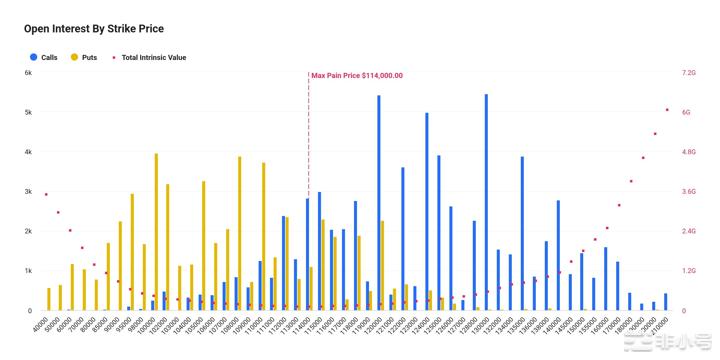
Option expiration events: This Friday (October 29, 16:00 Beijing Time), 127,000 BTC will expire for delivery, with a notional value of $144.2 billion, max pain at $114,000, and put/call ratio of 0.76. Ethereum option expiration has a notional value of $25.6 billion, max pain at $4,100, and put/call ratio of 0.7. Such large expiration events typically impact short-term capital flows and price volatility.
Related Image
4. Credit and Institutional Capital Flows
BTC lending market recovery: Ledn report shows that loan issuance this year exceeded $1 billion, with $392 million in BTC-collateralized loans issued in Q3, annual recurring revenue of $100 million. Ledn's loan scale as of end-September was $836.2 million, average LTV of 42.7%, and released reserve proof. Data shows that holders are obtaining liquidity through BTC collateral, indicating ongoing market liquidity demand and gradual recovery in the credit market.
Technical Indicator Analysis
1. Relative Strength Index (RSI 14)
According to Bitbo data, as of October 31, 2025, Bitcoin's 14-day RSI is 50.59. The RSI index is in the neutral zone (around 50), showing neither clear overbought (>70) nor oversold (<30), indicating relatively balanced bullish-bearish forces in the current market.
From recent trends, RSI oscillates around 50, showing that Bitcoin's short-term trend lacks clear direction, with investor sentiment tending towards观望. If RSI can steadily break above 60, it may indicate enhanced short-term upward momentum; conversely, if it falls below 45, short-term pressure risks increase.
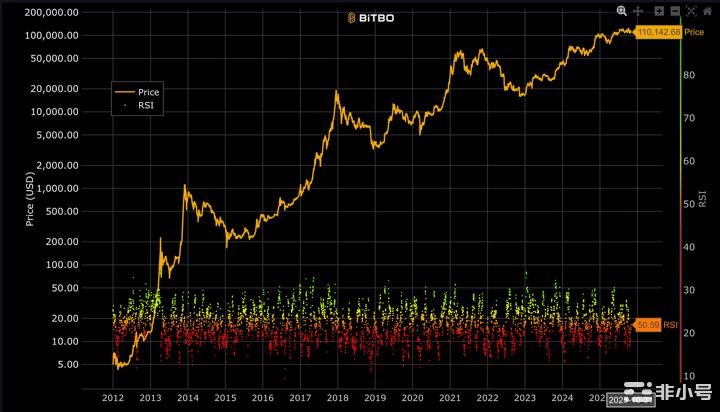
Bitcoin 14-Day RSI Data Image
2. Moving Average (MA) Analysis
MA5 (5-day moving average): $111,586
MA20 (20-day moving average): $114,366
MA50 (50-day moving average): $115,053
MA100 (100-day moving average): $115,692
Current price: $109,244

MA5, MA20, MA50, MA100, M200 Data Image
The current price is below all short- and medium-term moving averages, indicating Bitcoin is in a downward pressure zone short-term.
The arrangement MA5 < MA20 < MA50 < MA100 is a bearish arrangement, with short-term moving averages showing a clear downward trend and insufficient short-term bullish momentum.
If the price can break through near MA20 at $114,366, it may open up short-term rebound space, further attacking key moving averages MA50 and MA100.
Combined with long-term moving averages, if the Bitcoin price stays above MA100, there is still medium-term support, but the current price deviation is large, requiring attention to technical rebound or pressure decline risks.
3. Key Support and Resistance Levels
Support Levels: Short-term, Bitcoin's key support areas are mainly around $106,000 and $108,000.
Resistance Levels: Short-term resistance is concentrated around $109,000, with higher resistance levels at $112,000, $114,000, and $116,000. Breaking these resistances may bring new upward momentum.
The current price is near short-term resistance, and the market may face short-term oscillations or slight corrections.
Market Sentiment Analysis
As of October 24, the Fear & Greed Index reported 31 points, in the "Fear" zone, indicating overall cautious and bearish market sentiment.
Reviewing this week (October 25–October 30), daily Fear & Greed Index values were: 34 (Fear), 36 (Fear), 42 (Lower Neutral), 42 (Lower Neutral), 39 (Fear), 34 (Fear). The overall range operated between 34–42 points,持续低位震荡, with the market lacking clear optimistic sentiment.
Analysis shows fear sentiment dominates; combined with technical indicators and sentiment index, the market is still in a观望 and oscillation phase, with short-term operations advised to focus on support and resistance levels, avoiding chasing highs.
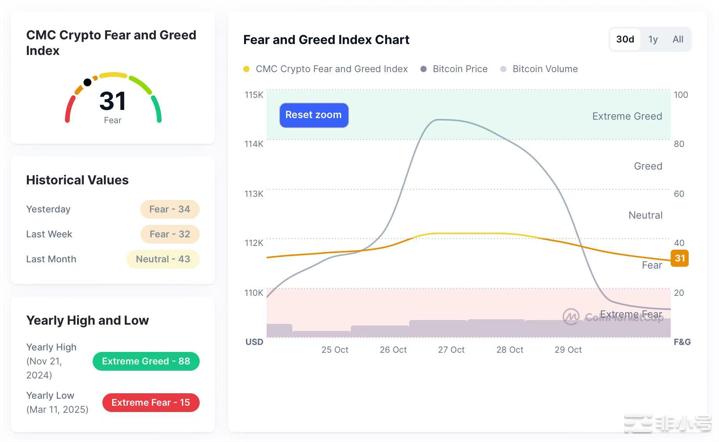
Fear & Greed Index Data Image
Macroeconomic Background
1. Federal Reserve October 28-29 Meeting
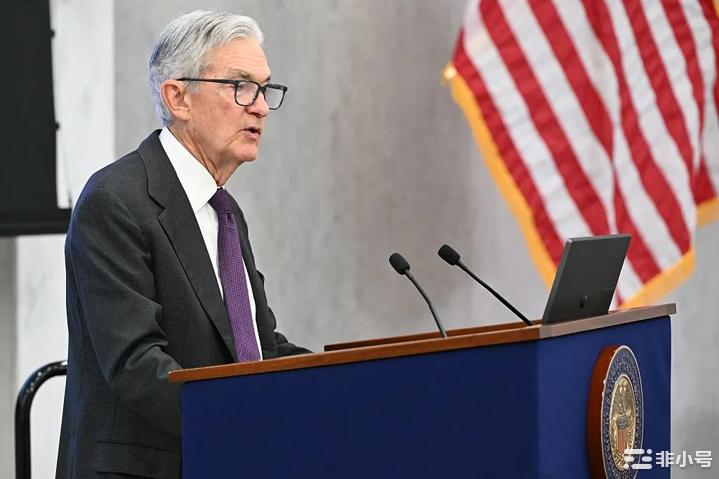
At the Federal Open Market Committee (FOMC) meeting held on October 28-29, the Federal Reserve announced a 25 basis point cut in the benchmark federal funds rate target range to 3.75%-4.00%. At the same time, Federal Reserve Chair Jerome Powell emphasized in the press conference: although this rate cut was expected, the next rate cut (e.g., at the December meeting) is by no means "a done deal."
Additionally, meeting minutes and announcements showed that the Fed plans to end its balance sheet reduction (Quantitative Tightening, QT) starting December 1, i.e., stop further reducing securities holdings.
In the market, after the news, the U.S. dollar index rebounded, bond yields (especially medium-term) rose somewhat, and although Bitcoin briefly rebounded before the rate cut news, it subsequently declined.
Related Image
2. Geopolitical Relationship Fluctuations
Around October 25, senior officials from both sides held talks in Kuala Lumpur, Malaysia, with U.S.-China sides showing signs of reaching a "framework agreement" in areas such as tariffs, rare earth export controls, agricultural product purchases, and control of digital platforms (e.g., TikTok). U.S. Treasury officials stated that China agreed to delay implementing new licensing systems for rare earth exports; the U.S. side also suspended threats of 100% tariffs on Chinese goods. This short-term boosted market risk appetite.
Subsequently, on October 30, Trump and Xi Jinping met in Busan, South Korea, announcing a substantive cooperation framework: the U.S. will reduce average tariffs from about 57% to 47%, China will resume U.S. soybean purchases and delay rare earth export restrictions, and both sides committed to cooperation in combating the inflow of fentanyl precursor chemicals. Although these achievements are not a comprehensive trade agreement, they significantly reduce the risk of "full-scale trade war escalation."

Related Image
3. Mining Dynamics
Hash Rate Changes
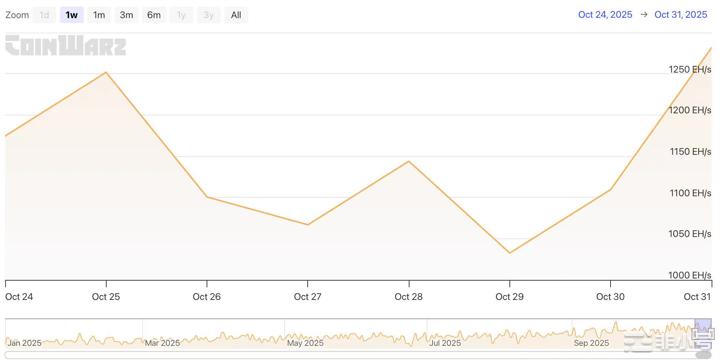
Over the past seven days, the Bitcoin network hash rate overall showed fluctuations, with this week's hash rate maintained in the range of 1032.58 EH/s to 1281.76 EH/s, at relatively high levels.
Trend-wise, although the全网算力 remains high, volatility has expanded, reflecting that some large mining farms are flexibly调度 amid fluctuations in electricity prices and operational costs. Recent temperature drops in some North American regions and stabilized power supply and demand have allowed some mining companies to restore more算力 online; at the same time, some small and medium-sized miners, due to rising energy costs and Bitcoin price阶段性横盘, choose to temporarily shut down high-energy-consuming equipment, causing short-term volatility in overall算力.
Weekly Bitcoin Network Hash Rate Data
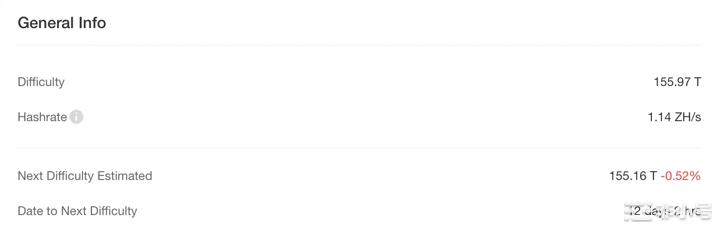
As of October 31, the全网算力 reached 1.14 ZH/s, mining difficulty at 155.97 T. The next difficulty adjustment is expected on November 12, estimated to decrease by about 0.52%, with adjusted difficulty around 155.16 T. The current mining difficulty of 155.97 T is at a relatively high level in recent months. Since early August, except for the first half of October, mining difficulty overall has shown a持续攀升 trend, reflecting the continuous deployment of new high-performance miners and network算力 expansion. The expected slight decrease in the next adjustment reflects阶段性退出 of some算力 under high difficulty and energy consumption pressure.
Bitcoin Mining Difficulty Data
Miner Revenue
According to YCharts data, this week's Bitcoin miners' average daily total revenue (including block rewards and transaction fees) fluctuated in the range of $46.37 million to $59.56 million.
October 25: $58.06 million
October 26: $52.69 million
October 27: $55.38 million
October 28: $59.56 million
October 29: $46.37 million
Overall, this week's miner revenue is basically flat compared to the previous周期, with the mining industry's overall profit level maintained in a stable range.
4. Policy and Regulatory News
Ghana Central Bank: Plans to Implement Bitcoin and Cryptocurrency Regulation by End of 2025
October 25 news, according to market sources, the Ghana Central Bank announced plans to formulate Bitcoin and cryptocurrency-related regulations by the end of 2025,届时 Ghana will become the 9th African country to adopt digital asset laws. (Bitcoin Archive)

Related Image
South Korean National Assembly First Proposes Bill to Include Stablecoins in Foreign Exchange Transaction Act Regulation
October 28 news, according to Yonhap News, South Korean People Power Party member Park Sung-hoon will代表 propose a bill to amend the "Foreign Exchange Transaction Act," including stablecoins in the scope of payment means defined by the law.
The bill aims to amend Article 3, Paragraph 1 "Definitions" section, listing stablecoins alongside government notes, banknotes, coins, etc., as payment means. Member Park stated that although stablecoins pegged to fiat currency value are recognized for their potential as new payment means, due to their nature differing from existing fiat currency, they are not recognized as payment means by the "Foreign Exchange Transaction Act," creating regulatory盲区, potentially leading to illegal foreign exchange transactions and tax evasion through stablecoins. The Bank of Korea previously expressed similar concerns, pointing out that dollar stablecoins might be used for cross-border current and capital transactions without the declaration procedures required by the "Foreign Exchange Transaction Act," and warned that stablecoin proliferation could make illegal transactions evading foreign exchange regulation easier. The Ministry of Economy and Finance认同 this bill, stating it is consulting with relevant agencies like the Financial Services Commission and central bank on specific regulatory plans.
German AfD Urges German Government to Treat Bitcoin as Strategic Asset
October 29 news, according to Cointelegraph report, Germany's main opposition party—Alternative for Germany (AfD)—has submitted a formal motion to the federal parliament, opposing excessive regulation of Bitcoin. The motion was submitted on October 23, arguing that Bitcoin is fundamentally different from other crypto assets and should not be included in the European unified crypto asset market regulatory framework (MiCA).
AfD stated in the motion that current tax treatment of Bitcoin is generally positive, but legal uncertainties remain, hindering private long-term investment. The party also calls on German legislators to consider treating Bitcoin as a national reserve strategic asset, and advocates maintaining the current 12-month holding period for tax-free gains, keeping Bitcoin exempt from value-added tax, and ensuring personal self-custody rights.

Related Image
5. Bitcoin-Related News
Global Enterprises and National Bitcoin Holdings (This Week's Statistics)
1. El Salvador
October 26 news, El Salvador increased holdings by 8 Bitcoin over the past 7 days, currently its total Bitcoin holdings reach 6361.18, total value approximately $710 million.
2. Prenetics (U.S.-listed company)
October 25 news, Prenetics launched public offering of Class A ordinary shares and warrants for strategic Bitcoin accumulation, as of October 24 holdings 272 BTC.
October 28 news, Prenetics completed $48 million oversubscribed financing, plans to purchase 1 BTC daily, target to achieve $1 billion in assets within five years.
3. B HODL (UK-listed company)
October 26 news, B HODL announced increase of 6 Bitcoin, currently company's total Bitcoin holdings reach 148 BTC.
4. Bitplanet (South Korea-listed company)
October 27 news, Bitplanet launched daily Bitcoin accumulation plan, purchased 93 BTC last week, future target to build a 10,000 Bitcoin treasury.
October 29 news, the company spent another $1.09 million to increase holdings by 9 BTC, total holdings rose to 110.67 BTC.
October 30 news,新增 purchased 9 BTC, total holdings reached 119.67 BTC.
5. American Bitcoin Corp. (Nasdaq: ABTC)
October 27 news, American Bitcoin increased holdings by 1414 BTC, currently total holdings approximately 3865 BTC, sources include mining and strategic purchases.
6. OranjeBTC (Brazil-listed company)
October 27 news, OranjeBTC spent approximately $774,000 to increase holdings by 7 BTC, currently total holdings reach 3708 BTC.
7. Prenetics (U.S.-listed company)
October 27 news, completed $46.8 million oversubscribed equity financing, for global expansion of health brand IM8 and accelerating Bitcoin treasury strategy, plans to purchase 1 BTC daily, target to achieve $1 billion in revenue and Bitcoin holdings within five years.
8. Strategy (i.e., MicroStrategy)
October 27 news, Strategy spent approximately $43.4 million last week to increase holdings by 390 BTC, currently total holdings reach 640,808 BTC.
9. French Parliament (UDR party proposal)
October 28 news, French Parliament proposed establishing a national strategic Bitcoin reserve plan, target to hold approximately 420,000 BTC (2% of total Bitcoin supply) within 7-8 years.
10. Hyperscale Data (NYSE-listed)
October 28 news, Hyperscale Data announced expansion of Bitcoin treasury to $68.8 million, currently its subsidiaries hold approximately 194.5 BTC, and plan to continue accumulating.
11. Strive (BTC treasury company)
October 28 news, Strive increased holdings by 72 BTC, currently company's total holdings reach 5958 BTC.
12. ZOOZ (Nasdaq-listed company)
October 28 news, ZOOZ spent $10 million to increase holdings by 94 BTC, company's Bitcoin total holdings rose to 1036 BTC.
13. Universal Digital (Canada-listed company)
October 28 news, Universal Digital announced it will raise $50 million through issuing convertible bonds for further Bitcoin accumulation, currently accumulation plan in progress.
14. Vanadi Coffee (Spain-listed company)
October 29 news, Vanadi Coffee increased holdings by 2 BTC, company's current total holdings reach 119 BTC.
15. Coinbase (U.S. exchange)
October 31 news, Q3 net income $433 million, total revenue $1.9 billion. This quarter increased Bitcoin holdings by approximately $299 million, currently holds 14,548 BTC (value approximately $1.6 billion).
Tom Lee: Believes There Will Still Be a Wave of Rising Trend Before Year-End, Bitcoin and Ethereum Technically Turning Positive
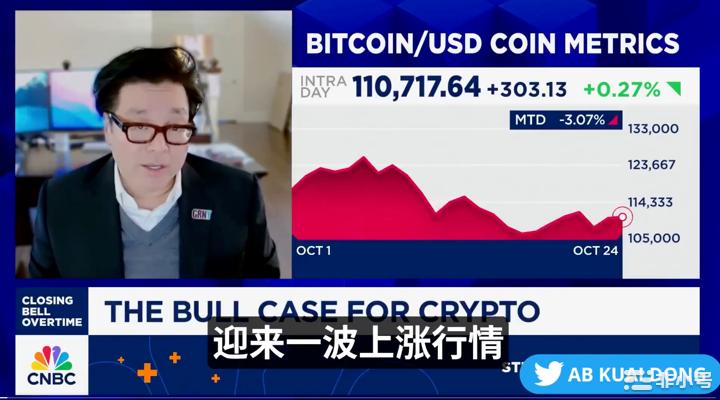
October 25 news, Tom Lee stated in an interview with CNBC: "The crypto market experienced a large-scale deleveraging event, partly caused by factors including tariffs and trade frictions, this is the most severe liquidation event in the crypto industry in the past 5 years, chain reactions after the event are still ongoing, pessimistic sentiment remains haunting two weeks later, but I believe these phenomena are about to end, because Bitcoin and Ethereum contract open interests are at historical lows, and at this time both are technically turning positive, so I also believe that cryptocurrencies will迎来 a wave of rising trend before year-end, JPMorgan recently stated that it may accept cryptocurrencies as collateral, which is very helpful for market confidence."
Related Image
ISM Non-Manufacturing PMI Shows Bitcoin Cycle May Extend Beyond Historical Levels
October 26 news, ISM Non-Manufacturing PMI has historically been highly correlated with major highs in Bitcoin market cycles—if this pattern repeats, it may mean this Bitcoin cycle will be longer than previous ones.
The correlation between ISM PMI and Bitcoin (BTC) price ($111,582) was initially promoted by Real Vision's Raoul Pal, later gaining recognition among macro-focused crypto analysts.
Analyst Colin Talks Crypto pointed out: "The tops of the past three Bitcoin cycles大体上都 aligned with this monthly震荡指数." He mentioned the repeated overlap between Bitcoin market highs and PMI cyclical highs.
If this relationship holds, Colin added, "it would mean the Bitcoin cycle duration may be significantly longer than historical averages."
Standard Chartered: If This Week Goes Well, Bitcoin May Never Fall Below $100,000 Again
October 27 news, according to The Block report, Standard Chartered stated, "if this week goes well," Bitcoin may never fall below $100,000 again. Analyst Geoffrey Kendrick noted that the Bitcoin-gold ratio rebounded slightly above previous levels; this ratio compares Bitcoin's market cap to gold's market cap and rises as Bitcoin's market cap grows.
Another key signal of market strength again is that spot Bitcoin ETFs will see new inflows. If even half of the funds re-enter Bitcoin ETFs from Monday to Wednesday, it would be a strong signal of recovering market sentiment. In recent weeks, Bitcoin ETF inflows have lagged behind gold ETFs, "needing some catch-up."

Related Image
Kyrgyzstan Announces Allowing Banks and Financial Institutions to Custody Bitcoin and Cryptocurrencies
October 27 news, according to market sources, Kyrgyzstan announced allowing banks and financial institutions to custody Bitcoin and cryptocurrencies.
"Rich Dad Poor Dad" Author: Currently Holds Millions of Dollars in BTC, Predicts Its Price Will Double to $200,000 This Year
October 29 news, "Rich Dad Poor Dad" author Robert Kiyosaki shared his views on Bitcoin on his social platform. Kiyosaki stated that he currently holds millions of dollars in BTC and predicts BTC price will double this year, possibly reaching a high of $200,000.
Kiyosaki stated, "When his friends see the account, they only focus on hundreds of thousands in losses, ignoring millions in gains. He believes this psychological difference is the key distinction between the rich and the poor and middle class, calling it emotional intelligence (EQ). The poor and middle class are poor because they fear failure more than they desire success; emotional intelligence is more important than IQ in the money world. Successful rich people know how to respect the two emotions 'fear' and 'greed' and can rationally control them."

Related Image
Michael Saylor: Bitcoin Has Clearly Positioned as Digital Gold, Future Bitcoin Price Will Continue to Rise
October 29 news, MicroStrategy co-founder Michael Saylor revealed in a recent interview that Bitcoin has clearly positioned as digital gold, a store of value. He mentioned that since the U.S. government approved Bitcoin ETFs last year, market consensus on Bitcoin as digital gold has gradually formed, and this year's March crypto summit further solidified this view.
He also pointed out that gold-backed credit once dominated the Western monetary system, and as digital capital, Bitcoin's上层建筑 digital credit tools are also rapidly developing. Additionally, he mentioned the rapid growth in the digital finance field over the past year, including tokenization of货币, stocks, bonds, and other real assets, bringing huge impetus to权益证明 networks like Ethereum.
He emphasized that institutional acceptance of Bitcoin is a key factor for the industry's future development. Recently,多家 large banks including JPMorgan, Citigroup, Wells Fargo have adjusted their crypto policies, starting to accept Bitcoin and Ethereum as collateral, marking a significant shift in traditional financial institutions' attitudes towards crypto assets.
Michael Saylor: Predicts BTC to Reach $150,000 Before Year-End, Target $1 Million in 4-8 Years
October 29 news, according to Bitcoin Magazine disclosure, Strategy founder Michael Saylor stated in a CNBC interview his latest Bitcoin price prediction, reaching $150,000 before year-end, target $1 million in 4 to 8 years.

Related Image
Arthur Hayes Comments on Japanese Economic Policy, Will Push Bitcoin to 200 Million Yen, Approximately $1.3 Million
October 30 news, BitMEX co-founder Arthur Hayes stated: Bank of Japan issued a golden phrase, "Given the increasing uncertainty in the domestic political situation and the global economic weakness indicated by the Federal Reserve's continuous rate cuts, we believe it is better to maintain existing policies unchanged, with the expectation of further driving inflation (without specifying its measure) to our 2% target." Translated, it means Bitcoin price will reach 200 million yen (approximately $1.3 million).